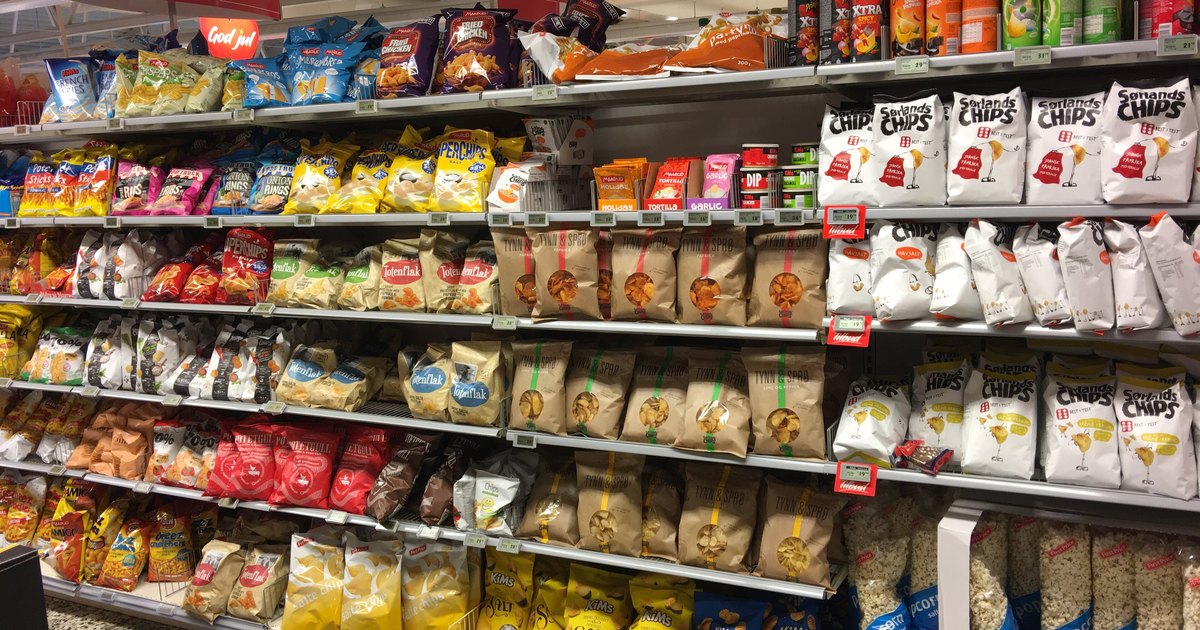
Packets of chips, biscuits, sweetened drinks and instant snacks sold in India are on course to carry a red warning on the front if they are high in sugar, salt or saturated fat. On 26 November 2026 the Supreme Court told the Food Safety and Standards Authority of India (FSSAI) to bring in a mandatory warning-style front-of-pack nutrition label, and it set out what that label must look like. It also turned down part of the regulator’s own design.
The labels won’t show up on shelves next week, though. This guide covers what the court ordered, how it differs from FSSAI’s proposal, a realistic timeline, and how to check a packet yourself in the meantime. It’s based on the 131-page judgment in 3S and Our Health Society v. Union of India (2026 INSC 1275), plus reports in The Hindu, Bar & Bench, The Indian Express and Business Standard.
What the Supreme Court ordered
A bench of Justices J.B. Pardiwala and K. Vinod Chandran was hearing a public interest petition from 3S and Our Health Society, a Kerala-based NGO. It had asked for mandatory front-of-pack warnings on foods high in sugar, salt and saturated fat. The court’s final directions (paragraph 222 of the judgment) boil down to six points:
- Total sugars and saturated fat, not “added” sugar and fat. Along with salt, these are the nutrients the label must flag. That’s the regulator’s own position from before the 2024 Dietary Guidelines for Indians.
- New thresholds. FSSAI has to work out fresh cut-offs. The values in Table 15.1 of the 2024 guidelines can’t be used as they stand, because they were calculated for added sugar and added fat.
- One red hexagon per nutrient. A product high in both sugar and saturated fat gets two separate hexagons, each with a pictogram and the words “High Sugar” or “High Fat”. One combined hexagon isn’t allowed.
- A minimum size. Each hexagon should cover at least 4–5% of the front panel, in line with international practice, with text that’s easy to read at the time of purchase.
- No look-alikes. Sweetened drinks that stay under the limits can’t use a symbol that looks like the warning label to show their food category.
- Clear exemptions and no loopholes. FSSAI must publish a complete, reasoned list of exempt foods, and it must watch whether companies swap sugar or fat for artificial additives just to avoid the label.
The court also told the Union government to strengthen nutrition teaching in schools. It will hear the case again after ten weeks, when FSSAI must file an affidavit on how far the draft rules have got.
FSSAI’s proposal vs the court’s version
| Point | FSSAI proposal (affidavits of Aug–Sept 2026) | Supreme Court direction (26 Nov 2026) |
|---|---|---|
| Nutrients flagged | Added sugar, added/saturated fat, salt | Total sugars, saturated fat, salt |
| When a label appears | Bar & Bench reports the proposal covered products high in any two or more nutrients | Each nutrient over its threshold gets its own hexagon |
| Design | Red hexagon with “HIGH FAT / HIGH SUGAR / HIGH SALT” | Separate hexagons, each with a standard pictogram plus words |
| Size | Font one point larger than the back-of-pack nutrition table | Each hexagon at least 4–5% of the front panel |
| Thresholds | Based on the 2024 Dietary Guidelines table | Must be redone. “Neither too low nor too high” |
| Exemptions | Single-ingredient foods; foods naturally rich in fat, sugar or salt such as ghee, oil, salt, sugar, jaggery, honey | A fuller, reasoned list, so that products which should carry a label don’t slip through |
| Transition | 365 days after notification | Accepted, but FSSAI must prevent misuse. No further extensions “ordinarily” |
Why the court rejected the old thresholds
The judgment cites a study by NatFirst Private Limited of Hyderabad, which checked 44,109 barcode records of packaged foods sold in India against the 2024 guideline thresholds. It found that 94.1% of products crossed at least one limit and 85.3% crossed two or more. If almost every packet carries a red warning, the court said, people stop noticing it, which it called “label fatigue”. If the limits are set too high, most unhealthy products escape. So FSSAI has to find a level in between, backed by evidence, and then tighten it in phases over time. Chile and Mexico are named as countries that have done this.
When will the labels appear? A realistic timeline
The judgment doesn’t name a date when packets will change. It does set out the steps, and FSSAI’s own policy on labelling changes adds one more:
| Step | What happens | Source |
|---|---|---|
| 26 Nov 2026 | Judgment delivered | Supreme Court |
| Next ~4 months | FSSAI publishes draft rules for 60 days of public and WTO comments, reviews them and sends them to the ministry for gazette notification | FSSAI’s timeline, accepted by the court |
| ~10 weeks from judgment | Case listed again. FSSAI files a progress affidavit | Judgment, para 223 |
| Notification + 365 days | Voluntary period: companies can use up old packaging | FSSAI affidavit, accepted by court |
| The following 1 July | FSSAI’s 48th Food Authority meeting decided labelling changes take effect on 1 July, after at least 365 days from notification | FSSAI affidavit quoted in the judgment, para 193 |
Our reading: if FSSAI notifies the final rules on time, in roughly the first half of 2027, then the 365-day window and the 1 July rule together point to mid-2028 as the earliest date the warnings become compulsory. Some brands could start using them sooner during the voluntary year. That’s an estimate based on the steps above, not a date anyone has announced.
How to check a packet yourself until then
You don’t need to wait for the hexagon. The nutrition table on the back already has what you need.
- Find the “per 100 g” or “per 100 ml” column. Per-serving figures depend on the brand’s idea of a serving.
- Look at “Total sugars”, not just “Added sugars”. This is the measure the court picked.
- Check “Saturated fat” separately from total fat.
- Convert sodium to salt if only sodium is listed. Salt is about 2.5 times the sodium figure.
- Multiply by what you’ll actually eat. A family pack finished in one sitting is several servings.
- Compare two brands in the same category per 100 g. The gap is often bigger than you’d expect.
Worked example (illustrative numbers)
Say a 150 g pack of cream biscuits lists 30 g total sugars and 12 g saturated fat per 100 g. One pack then holds 45 g of sugar (30 × 1.5) and 18 g of saturated fat. At about 4 g of sugar per teaspoon, that’s roughly 11 teaspoons of sugar in the pack. These are example figures, not a real product, but the steps are the same on any label. Under the new rules, the front of the pack would show you this at a glance.
What the two sides say
The petitioner wanted the labels to be mandatory straight away, with no transition period. The court disagreed and accepted the 365-day window, pointing to the trade-balancing principle in Section 18(1)(d) of the Food Safety and Standards Act. FSSAI’s position is recorded in the judgment through its affidavits: a red-hexagon design, a 365-day transition and a four-month timeline for the regulations. Business Standard quoted an unnamed FMCG executive who said FSSAI might end up adopting NIFTEM’s view on front-of-pack labelling, and that, in hindsight, health star ratings had seemed the better option. The petitioner’s lawyer, Rajiv Shankar Dwivedi, told The Indian Express it was “a landmark development”.
At the time of publishing, FSSAI had not issued a public statement on the judgment, and we found no statement from a major food-industry association. We’ll update this article if they respond.
The court was also blunt about multinationals. “A consumer in India is entitled to no less protection, and no less information, than a consumer in the United States or the United Kingdom,” the bench said, urging global brands to use the same standards everywhere.
For more food-safety and consumer guides, see our coverage of the Listeria biscuit sandwich recall, what to do when a health insurance claim is rejected, and how the RBI’s proposed Stop Switch would protect bank customers.
FAQ
What is a front-of-pack warning label?
It’s a simple symbol on the front of a packet that tells you a product is high in a nutrient of concern. In India it will be a red hexagon reading “High Sugar”, “High Fat” or “High Salt”, with a pictogram.
When will red warning labels be mandatory in India?
No date has been announced. FSSAI has about four months to finalise draft rules. After that, companies get a 365-day voluntary period, and FSSAI’s policy is that labelling changes take effect on 1 July. By our estimate, that makes mid-2028 the earliest likely date.
Will ghee, sugar or honey carry the warning?
FSSAI proposed exempting single-ingredient foods and foods naturally rich in fat, sugar or salt, such as ghee, edible oil, salt, sugar, jaggery and honey. The court asked for a fuller, reasoned exemption list, so the final list could change.
Why total sugars instead of added sugar?
The court said total sugars and saturated fat were FSSAI’s own long-standing choice before the 2024 guidelines. A total figure also catches sugar that “added sugar” can leave out.
What happens if a company ignores the rules?
The court said no further extension should ordinarily be given, and non-compliant food businesses should be “dealt with strictly, in accordance with law”.
Featured image: snack aisle in a supermarket (Spar, Tjøme, Norway), used here as a generic image of packaged snacks. Photo: Wolfmann, Wikimedia Commons, CC BY-SA 4.0 (cropped).